

Understand the specialized accounting system used by non-profits and governments to track restricted resources and ensure public accountability. At YPTC, we’re passionate about helping nonprofits with their accounting needs. Working with our team of experts allows you to be confident in your organization’s financial management without taking time out of your staff’s busy schedule to implement the proper procedures. The financial reporting of assets and liabilities also differs between the two sectors. For-profit companies use a balance sheet to report owners’ or shareholders’ equity, which is derived from the company’s assets, liabilities, and accumulated profits. Fiduciary funds are used to account for resources held by a government in a trustee or agency capacity for others, and cannot be used to support the government’s own programs.
- Simplify the entire budget cycle with a purpose-built solution for public sector agencies of all sizes.
- Whether you’re practicing accounting for a non profit organization or managing financials in a business, knowing how these models diverge is key to applying the right accounting standards and making informed decisions.
- They can often apply for tax-exempt status, but the IRS isn’t likely to recognize them as organizations eligible for 501(c)(3) status.
- Working with our team of experts allows you to be confident in your organization’s financial management without taking time out of your staff’s busy schedule to implement the proper procedures.
- This can help them more accurately describe their financial situation, since it also allows them to take into account things like expected income, future budget funds, future sales of assets and expected tax revenue.
- In a for-profit business, revenue is gained through voluntary exchange between willing buyers and sellers.
What Types of Funds Require Accounting?
- These elements are crucial for maintaining the integrity of public institutions and for fostering a trusting relationship between the government and the people it serves.
- Most guides either oversimplify nonprofit accounting or bury the important financial information under technical jargon.
- Even if a nonprofit is exempt from federal income taxes, it is likely that its employees will be subject to employment taxes.
- Organizations with gross receipts under $200,000 and total assets under $500,000 at the end of the tax year can opt to file Form 990-EZ, a shorter form.
- A $10,000 unrestricted donations are managed differently from a $10,000 grant earmarked for specific programs.
- Common mistakes include using restricted funds for the wrong purpose or forgetting to “release” funds from restriction when you’ve met the requirements.
These statements are prepared using the full accrual basis of accounting and the economic resources measurement focus. This high-level view includes the Statement of Net Position and the Statement of Activities. This philosophical difference dictates a structural difference where the concept of Owner’s Equity is replaced by Net Assets or Fund Balance. Non-profit organizations governed by FASB standards report Net Assets classified by the existence or absence of donor restrictions.

Required Financial Statements
All overhead spending should be approved by a board member or authorized individual before being charged to the organization. Learn all the best practices of CRMs to simplify customer relationship management and elevate your bond with loyal customers. As a small business owner, you must know how to go about opening your bank account and managing your finances through business banking.
What Financial Statements Must A Nonprofit Organization Prepare Annually?

For example, government and nonprofit accounting interest earned by a manufacturer on its investments is a nonoperating revenue. Budgeting is also complicated when sources of support are not secured at the time the budget is prepared for the upcoming year. This could lead to the use of an account entitled Resource Development in order to balance the budget.
Revenue Recognition in Government

Another difference between for-profit and nonprofit companies is their ability to reinvest and distribute profits. For-profit organizations typically have the freedom to distribute the profits they generate to owners and shareholders or reinvest them into the business. Publicly traded companies may also incorporate profit maximization to make the highest profits possible. In 2004, GASB issued two guidelines — Statements 43 and that would mandate the detailed financial reporting of public-employee non-pension information. Previous to these statements, detailed financial information about employee nonpension benefits was not required.

Risk Management
- When considering nonprofit and for profit accounting software, each type of organization faces unique challenges, but nonprofits require more specialized software to meet their needs.
- The operating activities section of the SCF reports the changes in cash other than those reported in the investing and financing sections.
- Since your budget is your guiding financial document, you’ll want to revisit it frequently.
- The most distinguishing feature of governmental accounting is the mandatory use of Fund Accounting, which treats different pools of resources as separate accounting and fiscal entities.
- The absence of ownership equity reflects the organization’s legal structure, where all resources must be deployed in service of the stated mission.
The best accounting software for government and non-profit organizations must simplify complex financial tasks. It should offer features like fund accounting, grant management, and reporting compliance, catering to the unique needs of these sectors. It must be user-friendly and efficient and help in transparent, accountable financial management, essential for public trust. Instead, nonprofit financial reports include a Statement of Activities, which tracks revenue and expenses over time.
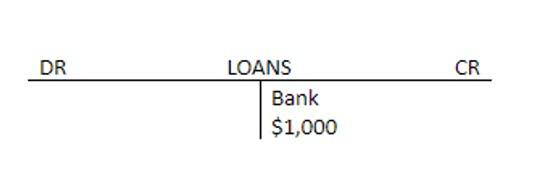
Fund accounting represents a specialized system of financial record-keeping employed predominantly by non-profit organizations and governmental entities in the United States. This methodology departs significantly from standard commercial accounting because its primary objective is not the calculation of profit or loss. Instead, fund accounting focuses on demonstrating strict accountability for how external resources, often restricted by law or donor mandate, are utilized. For-profits emphasize profitability and asset growth, directly tied to dividends and returns on investment. Nonprofits, on the other hand, focus on reporting their financial position, stability, and expenditures to various stakeholders, including funders, board members, the community, and tax authorities.
Expense Management
Common mistakes include using restricted funds for the wrong purpose or forgetting to “release” funds from restriction when you’ve met the requirements. For effective financial management, both roles should work together seamlessly. While bookkeepers maintain the accurate daily records that accountants need for analysis, accountants set up the systems and procedures for the bookkeepers to follow. For example, when a nonprofit buys equipment or property, these assets are managed differently than in a business setting. This statement allows you to determine how much money you have available to pay your expenses. You can also better understand how your organization manages the funding it receives through this document.
Whether you’re practicing accounting for a non profit organization or managing financials in a business, knowing how these models diverge is key to applying the right accounting standards and making informed decisions. An organization without owners and with the main purpose of providing services needed by society. Internal Revenue Service, a nonprofit organization may be granted tax exempt status. The statement of functional expenses is described as a matrix since it reports expenses by their function (programs, management and general, fundraising) and by the nature or type of expense (salaries, net sales rent). For instructional purposes we highlighted the column headings to indicate the expenses by function. We also highlighted the words in the first column as they indicate the nature or type of expenses.
This approach encourages nonprofit staff to review their budgets from the ground up by itemizing Financial Forecasting For Startups and evaluating every expense. Respond promptly and honestly when donors ask questions about how you used their money. Make your financial policies public and explain complex financial matters in simple terms. Beyond basic financial ratios, track indicators that show your resource efficiency and program sustainability. Monitor trends in donor retention rates, program cost per beneficiary, and operating reserve levels. In such situations, the immediate needs of the program take precedence over the building of operating reserves.